






力扣链接:1344. 时钟指针的夹角,难度等级:中等。
给你两个数 hour 和 minutes 。请你返回在时钟上,由给定时间的时针和分针组成的较小角的角度(60 单位制)。
请注意,返回的结果误差在 10^-5 以内都会被视为正确。
示例 1:
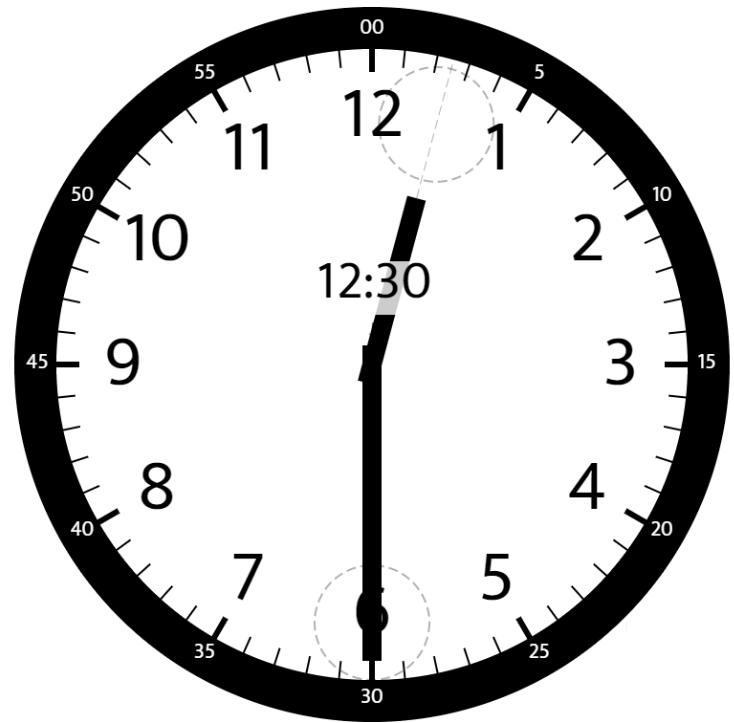
输入: hour = 12, minutes = 30
输出: 165
示例 2:
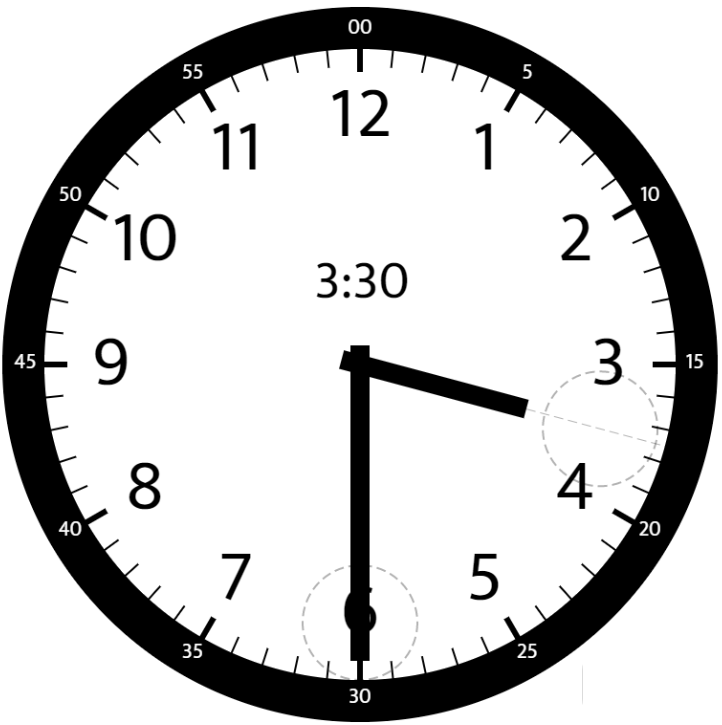
输入: hour = 3, minutes = 30
输出: 75
示例 3:
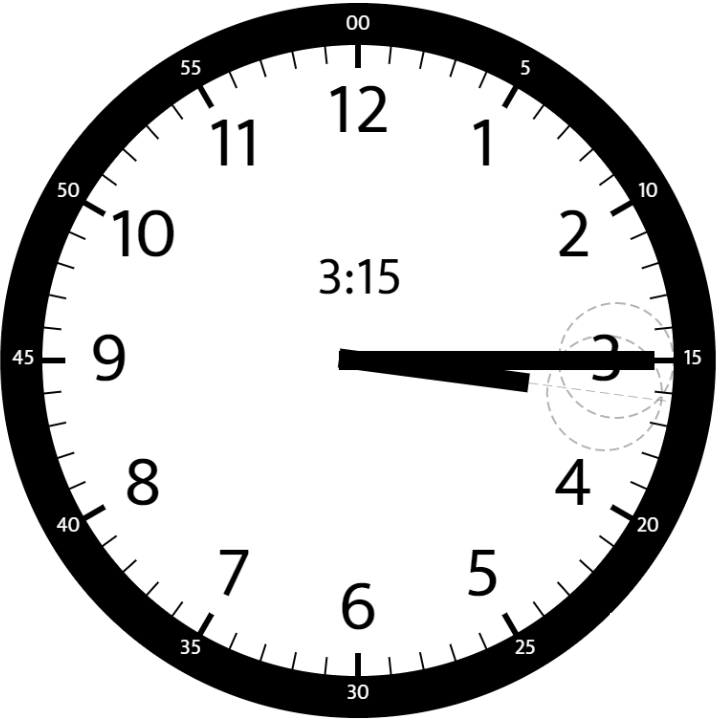
输入: hour = 3, minutes = 15
输出: 7.5
约束:
1 <= hour <= 120 <= minutes <= 59
相关标签
提示 1
The tricky part is determining how the minute hand affects the position of the hour hand.
提示 2
Calculate the angles separately then find the difference.
思路
要求出时针和分针之间的夹角,我们可以分别计算两根指针相对于 12 点钟位置(0 度)的角度,然后求这两个角度的绝对差值。
首先,我们来看分针:
整个表盘是 360 度,一共 60 分钟。因此,分针每分钟走 360 / 60 = 6 度。
所以,分针的角度就是 minutes * 6。
接下来,我们考虑时针:
整个表盘是 360 度,一共 12 个小时。因此,时针每小时走 360 / 12 = 30 度。
但是,当时针在走的时候,它并不是一动不动的!在 60 分钟内,时针会走 30 度,这意味着时针每分钟走 30 / 60 = 0.5 度。
所以,时针的角度是 (hour % 12) * 30 + minutes * 0.5。(我们使用 hour % 12 是因为 12 点钟与 0 点钟的起始位置是相同的)。
最后,我们计算这两个角度的绝对差值:diff = abs(hour_angle - minute_angle)。
因为题目要求返回较小的夹角,而两根指针会将表盘分成两个角度,它们的和是 360 度。所以我们返回 diff 和 360 - diff 中的较小值即可。
👋 站长寄语:我还为你开发了 coder.id - 打造程序员个人IP, 包含作品集、简历和博客等,助您顺利拿到 Offer!
步骤
- 计算分针的角度:
minute_angle = minutes * 6.0。 - 计算时针的角度:
hour_angle = (hour % 12) * 30.0 + minutes * 0.5。 - 计算两者的绝对差值:
diff = abs(hour_angle - minute_angle)。 - 返回较小的角度:
min(diff, 360.0 - diff)。
复杂度
时间复杂度
O(1)
空间复杂度
O(1)
解释
- 时间复杂度:
O(1),因为我们只进行了几次基本的算术运算。 - 空间复杂度:
O(1),我们只使用了几个变量来存储角度信息。
Python #
class Solution:
    def angleClock(self, hour: int, minutes: int) -> float:
        # Calculate the angle of the minute hand
        minute_angle = minutes * 6

        # Calculate the angle of the hour hand
        hour_angle = (hour % 12) * 30 + minutes * 0.5

        # Find the absolute difference between the two angles
        diff = abs(hour_angle - minute_angle)

        # Return the smaller angle
        return min(diff, 360 - diff)
Java #
class Solution {
    public double angleClock(int hour, int minutes) {
        // Calculate the angle of the minute hand
        double minuteAngle = minutes * 6.0;

        // Calculate the angle of the hour hand
        double hourAngle = (hour % 12) * 30.0 + minutes * 0.5;

        // Find the absolute difference between the two angles
        double diff = Math.abs(hourAngle - minuteAngle);

        // Return the smaller angle
        return Math.min(diff, 360.0 - diff);
    }
}
JavaScript #
/**
 * @param {number} hour
 * @param {number} minutes
 * @return {number}
 */
var angleClock = function(hour, minutes) {
    // Calculate the angle of the minute hand
    const minuteAngle = minutes * 6;

    // Calculate the angle of the hour hand
    const hourAngle = (hour % 12) * 30 + minutes * 0.5;

    // Find the absolute difference between the two angles
    const diff = Math.abs(hourAngle - minuteAngle);

    // Return the smaller angle
    return Math.min(diff, 360 - diff);
};
C++ #
class Solution {
public:
    double angleClock(int hour, int minutes) {
        // Calculate the angle of the minute hand
        double minute_angle = minutes * 6.0;

        // Calculate the angle of the hour hand
        double hour_angle = (hour % 12) * 30.0 + minutes * 0.5;

        // Find the absolute difference between the two angles
        double diff = abs(hour_angle - minute_angle);

        // Return the smaller angle
        return min(diff, 360.0 - diff);
    }
};
C# #
public class Solution {
    public double AngleClock(int hour, int minutes) {
        // Calculate the angle of the minute hand
        double minuteAngle = minutes * 6.0;

        // Calculate the angle of the hour hand
        double hourAngle = (hour % 12) * 30.0 + minutes * 0.5;

        // Find the absolute difference between the two angles
        double diff = Math.Abs(hourAngle - minuteAngle);

        // Return the smaller angle
        return Math.Min(diff, 360.0 - diff);
    }
}
Go #
import "math"

func angleClock(hour int, minutes int) float64 {
    // Calculate the angle of the minute hand
    minuteAngle := float64(minutes) * 6.0

    // Calculate the angle of the hour hand
    hourAngle := float64(hour % 12) * 30.0 + float64(minutes) * 0.5

    // Find the absolute difference between the two angles
    diff := math.Abs(hourAngle - minuteAngle)

    // Return the smaller angle
    return math.Min(diff, 360.0 - diff)
}
Ruby #
# @param {Integer} hour
# @param {Integer} minutes
# @return {Float}
def angle_clock(hour, minutes)
    # Calculate the angle of the minute hand
    minute_angle = minutes * 6.0

    # Calculate the angle of the hour hand
    hour_angle = (hour % 12) * 30.0 + minutes * 0.5

    # Find the absolute difference between the two angles
    diff = (hour_angle - minute_angle).abs

    # Return the smaller angle
    [diff, 360.0 - diff].min
end
Rust #
impl Solution {
    pub fn angle_clock(hour: i32, minutes: i32) -> f64 {
        // Calculate the angle of the minute hand
        let minute_angle = (minutes as f64) * 6.0;

        // Calculate the angle of the hour hand
        let hour_angle = ((hour % 12) as f64) * 30.0 + (minutes as f64) * 0.5;

        // Find the absolute difference between the two angles
        let diff = (hour_angle - minute_angle).abs();

        // Return the smaller angle
        diff.min(360.0 - diff)
    }
}
Kotlin #
import kotlin.math.*

class Solution {
    fun angleClock(hour: Int, minutes: Int): Double {
        // Calculate the angle of the minute hand
        val minuteAngle = minutes * 6.0

        // Calculate the angle of the hour hand
        val hourAngle = (hour % 12) * 30.0 + minutes * 0.5

        // Find the absolute difference between the two angles
        val diff = abs(hourAngle - minuteAngle)

        // Return the smaller angle
        return min(diff, 360.0 - diff)
    }
}
Swift #
class Solution {
    func angleClock(_ hour: Int, _ minutes: Int) -> Double {
        // Calculate the angle of the minute hand
        let minuteAngle = Double(minutes) * 6.0

        // Calculate the angle of the hour hand
        let hourAngle = Double(hour % 12) * 30.0 + Double(minutes) * 0.5

        // Find the absolute difference between the two angles
        let diff = abs(hourAngle - minuteAngle)

        // Return the smaller angle
        return min(diff, 360.0 - diff)
    }
}
其它语言
欢迎贡献代码到 GitHub repo -> 1344. 时钟指针的夹角。感谢!打造你的开发者个人IP
- 📄 简历 + 作品集 + 博客
- 🌐 支持绑定自定义域名
- ✨ 顶级子域名:
https://yourname.coder.id