





LeetCode link: 3558. Number of Ways to Assign Edge Weights I, difficulty: Hard.
There is an undirected tree with n nodes labeled from 1 to n, rooted at node 1. The tree is represented by a 2D integer array edges of length n - 1, where edges[i] = [u_i, v_i] indicates that there is an edge between nodes u_i and v_i.
Initially, all edges have a weight of 0. You must assign each edge a weight of either 1 or 2.
The cost of a path between any two nodes u and v is the total weight of all edges in the path connecting them.
Select any one node x at the maximum depth. Return the number of ways to assign edge weights in the path from node 1 to x such that its total cost is odd.
Since the answer may be large, return it modulo 10^9 + 7.
Note: Ignore all edges not in the path from node 1 to x.
Example 1:
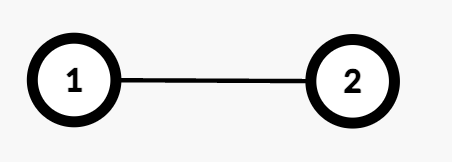
Input: edges = [[1,2]]
Output: 1
Explanation:
- The path from Node 1 to Node 2 consists of one edge (
1 → 2). - Assigning weight 1 makes the cost odd, while 2 makes it even. Thus, the number of valid assignments is 1.
Example 2:
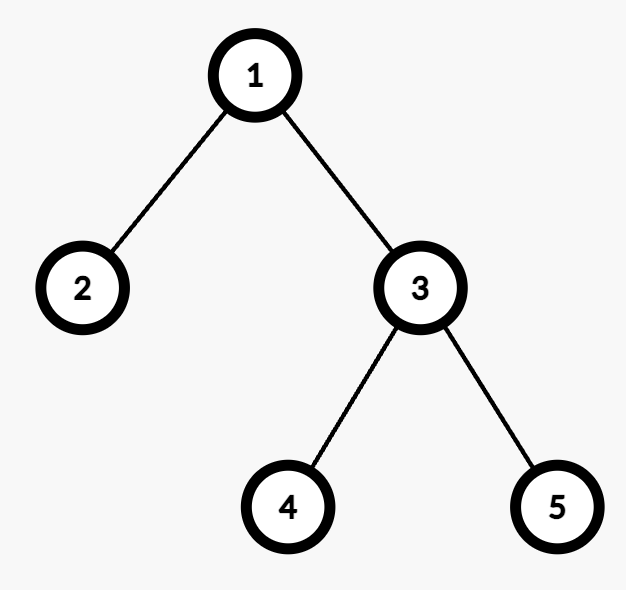
Input: edges = [[1,2],[1,3],[3,4],[3,5]]
Output: 2
Explanation:
- The maximum depth is 2, with nodes 4 and 5 at the same depth. Either node can be selected for processing.
- For example, the path from Node 1 to Node 4 consists of two edges (
1 → 3and3 → 4). - Assigning weights (1,2) or (2,1) results in an odd cost. Thus, the number of valid assignments is 2.
Constraints:
2 <= n <= 10^5edges.length == n - 1edges[i] == [u_i, v_i]1 <= u_i, v_i <= nedgesrepresents a valid tree.
Hint 1
Depth‑First Search (DFS) to compute the depth of each node from the root.
Hint 2
Find the maximum depth, max_depth.
Hint 3
The number of 2s doesn’t affect parity; we only need an odd number of 1s along the path.
Hint 4
The number of ways to choose an odd count of 1s among max_depth edges is 2^(max_depth-1).
Intuition
The problem asks for the number of ways to assign weights (1 or 2) to the edges in the path from node 1 to a node x at the maximum depth, such that the sum of the weights is odd.
First, we recognize that the actual structure of the tree beyond this path does not restrict our assignment on this specific path, because the problem explicitly states: "Ignore all edges not in the path from node 1 to x."
If the path from node 1 to x has a length of d edges, we need to choose weights from {1, 2} for these d edges so that their sum is odd. The sum is odd if and only if the number of 1s chosen is odd (since 2 is even and does not change the parity of the sum).
By the properties of binomial coefficients, the number of ways to choose an odd number of items from d items is 2^{d-1} (for d > 0). Thus, the problem simplifies to two steps:
- Find the maximum depth
d(number of edges from node 1) using BFS or DFS. - Calculate
2^{d-1} \pmod{10^9+7}using modular exponentiation.
👋 Hi, I'm the developer behind coder.id — Build your programmer brand. Create your portfolio, resume, and blog in minutes, and land your dream offer!
Step-by-Step Solution
- Build the Graph: Convert the
edgesarray into an adjacency list to represent the tree. - Find Maximum Depth: Initialize a queue for BFS starting from node 1. Track visited nodes to avoid cycles. Level by level, traverse the tree to find the maximum depth
d(number of edges). - Calculate Combinations: If
d == 0, return 0. Otherwise, we need to compute2^{d-1} \pmod{10^9 + 7}. - Modular Exponentiation: Use a fast power algorithm (or built-in functions where available) to compute the result efficiently and avoid overflow.
Complexity
Time complexity
O(n)
Space complexity
O(n)
Explanation
- Time Complexity:
O(n). Building the graph takesO(n)time. The BFS traversal visits each node and edge exactly once, takingO(n)time. The modular exponentiation takesO(log d)time, which isO(log n). The overall time complexity is linearO(n). - Space Complexity:
O(n). The adjacency list requiresO(n)space to store the graph. The BFS queue and the visited set/array also require up toO(n)space. Thus, the overall space complexity isO(n).
Python #
class Solution:
    def assignEdgeWeights(self, edges: List[List[int]]) -> int:
        MOD = 1_000_000_007

        # Determine the number of nodes
        n = len(edges) + 1

        # Build the adjacency list for the tree
        graph = [[] for _ in range(n + 1)]
        for u, v in edges:
            graph[u].append(v)
            graph[v].append(u)

        # BFS to find the maximum depth from node 1
        queue = collections.deque([1])
        seen = {1}

        step = 0
        while queue:
            # Process all nodes at the current depth
            for _ in range(len(queue)):
                u = queue.popleft()
                for v in graph[u]:
                    if v not in seen:
                        queue.append(v)
                        seen.add(v)
            step += 1

        # step tracks the number of nodes in the path (levels)
        # The number of edges d is step - 1
        # If d > 0, the answer is 2^(d-1) % MOD
        # which is 2^(step - 2) % MOD
        if step > 1:
            return pow(2, step - 2, MOD)
        return 0
Java #
class Solution {
    public int assignEdgeWeights(int[][] edges) {
        int n = edges.length + 1;

        // Build the graph using an array of lists
        List<Integer>[] graph = new ArrayList[n + 1];
        for (int i = 1; i <= n; i++) {
            graph[i] = new ArrayList<>();
        }

        for (int[] edge : edges) {
            graph[edge[0]].add(edge[1]);
            graph[edge[1]].add(edge[0]);
        }

        // BFS to find the maximum depth (number of edges)
        Queue<Integer> queue = new LinkedList<>();
        boolean[] visited = new boolean[n + 1];

        queue.offer(1);
        visited[1] = true;

        int maxDepthEdges = -1; // -1 because the root level has 0 edges

        while (!queue.isEmpty()) {
            int size = queue.size();
            for (int i = 0; i < size; i++) {
                int u = queue.poll();
                for (int v : graph[u]) {
                    if (!visited[v]) {
                        visited[v] = true;
                        queue.offer(v);
                    }
                }
            }
            maxDepthEdges++;
        }

        // If max depth is 0, no edges exist to assign
        if (maxDepthEdges <= 0) {
            return 0;
        }

        // Calculate 2^(maxDepthEdges - 1) % MOD
        return modPow(2, maxDepthEdges - 1, 1_000_000_007);
    }

    // Helper function for modular exponentiation
    private int modPow(long base, long exp, int mod) {
        long result = 1;
        base %= mod;
        while (exp > 0) {
            if ((exp & 1) == 1) {
                result = (result * base) % mod;
            }
            base = (base * base) % mod;
            exp >>= 1;
        }
        return (int) result;
    }
}
JavaScript #
/**
 * @param {number[][]} edges
 * @return {number}
 */
var assignEdgeWeights = function(edges) {
    const MOD = 1000000007n;
    const n = edges.length + 1;

    // Build adjacency list
    const graph = Array.from({ length: n + 1 }, () => []);
    for (const [u, v] of edges) {
        graph[u].push(v);
        graph[v].push(u);
    }

    // BFS to find max depth
    let queue = [1];
    const visited = new Uint8Array(n + 1);
    visited[1] = 1;

    let maxDepthEdges = -1;

    while (queue.length > 0) {
        const nextQueue = [];
        for (const u of queue) {
            for (const v of graph[u]) {
                if (visited[v] === 0) {
                    visited[v] = 1;
                    nextQueue.push(v);
                }
            }
        }
        queue = nextQueue;
        maxDepthEdges++;
    }

    if (maxDepthEdges <= 0) return 0;

    // Calculate 2^(maxDepthEdges - 1) % MOD using BigInt
    let base = 2n;
    let exp = BigInt(maxDepthEdges - 1);
    let result = 1n;

    while (exp > 0n) {
        if (exp % 2n === 1n) {
            result = (result * base) % MOD;
        }
        base = (base * base) % MOD;
        exp /= 2n;
    }

    return Number(result);
};
C++ #
class Solution {
public:
    int assignEdgeWeights(vector<vector<int>>& edges) {
        int n = edges.size() + 1;

        // Build the graph
        vector<vector<int>> graph(n + 1);
        for (const auto& edge : edges) {
            graph[edge[0]].push_back(edge[1]);
            graph[edge[1]].push_back(edge[0]);
        }

        // BFS to find max depth
        queue<int> q;
        vector<bool> visited(n + 1, false);

        q.push(1);
        visited[1] = true;

        int maxDepthEdges = -1;

        while (!q.empty()) {
            int size = q.size();
            for (int i = 0; i < size; ++i) {
                int u = q.front();
                q.pop();

                for (int v : graph[u]) {
                    if (!visited[v]) {
                        visited[v] = true;
                        q.push(v);
                    }
                }
            }
            maxDepthEdges++;
        }

        if (maxDepthEdges <= 0) return 0;

        // Calculate 2^(maxDepthEdges - 1) % MOD
        long long base = 2;
        long long exp = maxDepthEdges - 1;
        long long mod = 1e9 + 7;
        long long result = 1;

        while (exp > 0) {
            if (exp % 2 == 1) {
                result = (result * base) % mod;
            }
            base = (base * base) % mod;
            exp /= 2;
        }

        return result;
    }
};
C# #
public class Solution {
    public int AssignEdgeWeights(int[][] edges) {
        int n = edges.Length + 1;

        // Build the adjacency list
        List<int>[] graph = new List<int>[n + 1];
        for (int i = 1; i <= n; i++) {
            graph[i] = new List<int>();
        }

        foreach (var edge in edges) {
            graph[edge[0]].Add(edge[1]);
            graph[edge[1]].Add(edge[0]);
        }

        // BFS traversal
        Queue<int> queue = new Queue<int>();
        bool[] visited = new bool[n + 1];

        queue.Enqueue(1);
        visited[1] = true;

        int maxDepthEdges = -1;

        while (queue.Count > 0) {
            int size = queue.Count;
            for (int i = 0; i < size; i++) {
                int u = queue.Dequeue();
                foreach (int v in graph[u]) {
                    if (!visited[v]) {
                        visited[v] = true;
                        queue.Enqueue(v);
                    }
                }
            }
            maxDepthEdges++;
        }

        if (maxDepthEdges <= 0) return 0;

        // Modular exponentiation
        long baseVal = 2;
        long exp = maxDepthEdges - 1;
        long mod = 1000000007;
        long result = 1;

        while (exp > 0) {
            if ((exp & 1) == 1) {
                result = (result * baseVal) % mod;
            }
            baseVal = (baseVal * baseVal) % mod;
            exp >>= 1;
        }

        return (int)result;
    }
}
Go #
func assignEdgeWeights(edges [][]int) int {
    n := len(edges) + 1

    // Build adjacency list
    graph := make([][]int, n + 1)
    for _, edge := range edges {
        u, v := edge[0], edge[1]
        graph[u] = append(graph[u], v)
        graph[v] = append(graph[v], u)
    }

    // BFS to find max depth
    queue := []int{1}
    visited := make([]bool, n + 1)
    visited[1] = true

    maxDepthEdges := -1

    for len(queue) > 0 {
        size := len(queue)
        for i := 0; i < size; i++ {
            u := queue[i]
            for _, v := range graph[u] {
                if !visited[v] {
                    visited[v] = true
                    queue = append(queue, v)
                }
            }
        }
        queue = queue[size:]
        maxDepthEdges++
    }

    if maxDepthEdges <= 0 {
        return 0
    }

    // Modular exponentiation
    base := int64(2)
    exp := int64(maxDepthEdges - 1)
    mod := int64(1000000007)
    result := int64(1)

    for exp > 0 {
        if exp % 2 == 1 {
            result = (result * base) % mod
        }
        base = (base * base) % mod
        exp /= 2
    }

    return int(result)
}
Ruby #
# @param {Integer[][]} edges
# @return {Integer}
def assign_edge_weights(edges)
    n = edges.length + 1

    # Build graph
    graph = Array.new(n + 1) { [] }
    edges.each do |u, v|
        graph[u] << v
        graph[v] << u
    end

    # BFS traversal
    queue = [1]
    visited = Array.new(n + 1, false)
    visited[1] = true

    max_depth_edges = -1

    while !queue.empty?
        next_queue = []
        queue.each do |u|
            graph[u].each do |v|
                if !visited[v]
                    visited[v] = true
                    next_queue << v
                end
            end
        end
        queue = next_queue
        max_depth_edges += 1
    end

    return 0 if max_depth_edges <= 0

    # Calculate 2^(max_depth_edges - 1) % (10^9 + 7)
    # Ruby's pow method natively supports modulo arithmetic
    2.pow(max_depth_edges - 1, 1_000_000_007)
end
Rust #
use std::collections::VecDeque;

impl Solution {
    pub fn assign_edge_weights(edges: Vec<Vec<i32>>) -> i32 {
        let n = edges.len() + 1;

        // Build adjacency list
        let mut graph = vec![Vec::new(); n + 1];
        for edge in edges.iter() {
            let u = edge[0] as usize;
            let v = edge[1] as usize;
            graph[u].push(v);
            graph[v].push(u);
        }

        // BFS to find max depth
        let mut queue = VecDeque::new();
        let mut visited = vec![false; n + 1];

        queue.push_back(1);
        visited[1] = true;

        let mut max_depth_edges = -1;

        while !queue.is_empty() {
            let size = queue.len();
            for _ in 0..size {
                if let Some(u) = queue.pop_front() {
                    for &v in graph[u].iter() {
                        if !visited[v] {
                            visited[v] = true;
                            queue.push_back(v);
                        }
                    }
                }
            }
            max_depth_edges += 1;
        }

        if max_depth_edges <= 0 {
            return 0;
        }

        // Modular exponentiation
        let mut base: i64 = 2;
        let mut exp = (max_depth_edges - 1) as i64;
        let mod_val: i64 = 1_000_000_007;
        let mut result: i64 = 1;

        while exp > 0 {
            if exp % 2 == 1 {
                result = (result * base) % mod_val;
            }
            base = (base * base) % mod_val;
            exp /= 2;
        }

        result as i32
    }
}
Kotlin #
import java.util.LinkedList
import java.util.Queue

class Solution {
    fun assignEdgeWeights(edges: Array<IntArray>): Int {
        val n = edges.size + 1

        // Build graph
        val graph = Array(n + 1) { mutableListOf<Int>() }
        for (edge in edges) {
            graph[edge[0]].add(edge[1])
            graph[edge[1]].add(edge[0])
        }

        // BFS to determine max depth
        val queue: Queue<Int> = LinkedList()
        val visited = BooleanArray(n + 1)

        queue.offer(1)
        visited[1] = true

        var maxDepthEdges = -1

        while (queue.isNotEmpty()) {
            val size = queue.size
            for (i in 0 until size) {
                val u = queue.poll()
                for (v in graph[u]) {
                    if (!visited[v]) {
                        visited[v] = true
                        queue.offer(v)
                    }
                }
            }
            maxDepthEdges++
        }

        if (maxDepthEdges <= 0) return 0

        // Modular exponentiation
        var base = 2L
        var exp = (maxDepthEdges - 1).toLong()
        val mod = 1_000_000_007L
        var result = 1L

        while (exp > 0) {
            if (exp % 2L == 1L) {
                result = (result * base) % mod
            }
            base = (base * base) % mod
            exp /= 2L
        }

        return result.toInt()
    }
}
Swift #
class Solution {
    func assignEdgeWeights(_ edges: [[Int]]) -> Int {
        let n = edges.count + 1

        // Build adjacency list
        var graph = Array(repeating: [Int](), count: n + 1)
        for edge in edges {
            graph[edge[0]].append(edge[1])
            graph[edge[1]].append(edge[0])
        }

        // BFS to find max depth
        var queue = [1]
        var visited = Array(repeating: false, count: n + 1)
        visited[1] = true

        var maxDepthEdges = -1

        while !queue.isEmpty {
            var nextQueue = [Int]()
            for u in queue {
                for v in graph[u] {
                    if !visited[v] {
                        visited[v] = true
                        nextQueue.append(v)
                    }
                }
            }
            queue = nextQueue
            maxDepthEdges += 1
        }

        if maxDepthEdges <= 0 { return 0 }

        // Calculate 2^(maxDepthEdges - 1) % MOD
        var base = 2
        var exp = maxDepthEdges - 1
        let mod = 1_000_000_007
        var result = 1

        while exp > 0 {
            if exp % 2 == 1 {
                result = (result * base) % mod
            }
            base = (base * base) % mod
            exp /= 2
        }

        return result
    }
}
Other languages
Welcome to contribute code to GitHub repo -> 3558. Number of Ways to Assign Edge Weights I. Thanks!Level Up Your Developer Identity
- 📄 Resume, Portfolio & Blog
- 🌐 Custom Domain Binding Supported
- ✨ Premium Subdomain:
https://yourname.coder.id